Overwhelmed and Ambitious: Helping Clients Find Focus in a Full Season of Life
How neuroscience and small habits are helping high-capacity clients manage big goals

“Overwhelm is not a sign of weakness. It is a sign that your system needs structure.”
Over the past few months, several of my clients have shared their goals for 2025 and beyond.
Passing the CPA exam. Earning additional Pest Control Advisor categories. Preparing for the Certified Crop Advisor exam. Completing Microsoft certifications like Power BI.
Two of them are also planning 2026 weddings.
These are driven, capable professionals who want to grow. They are also overwhelmed.
Every conversation circles back to the same challenge.
How do you stay disciplined and organized when your life already feels full?
This article offers a practical, research supported system that is helping clients stay focused, consistent and calm while pursuing major milestones.
What the Latest Research Is Showing Us
Attention and Distraction
Dr. Gloria Mark at UC Irvine has tracked digital behavior for more than a decade. Her 2023 research shows the average on screen focus lasts about 47 seconds before we switch tasks. Each interruption increases stress and makes work feel heavier.
Deep Work and Time Blocking
Cal Newport at Georgetown University continues to demonstrate that success in cognitively demanding fields is tied to the ability to work without distraction. His research on time blocking and attention residue remains highly relevant in 2024.
Motivation and Dopamine Regulation
Dr. Andrew Huberman at Stanford University explains that attention and motivation are shaped by how we regulate dopamine. Notifications, alerts and constant digital inputs can disrupt this system and make deep work more difficult.
Small Habit Formation
Dr. BJ Fogg at Stanford Behavior Design Lab shows that consistent discipline comes from small, specific habits that build identity and momentum. Tiny actions lead to major results.
Reducing Mental Overload
Dr. Ethan Kross at the University of Michigan has demonstrated that writing down mental clutter reduces anxiety and improves clarity. This supports the strategy I call the Get It All Out session.
Intentional Pauses
Dr. Adam Grant at Wharton has written extensively about avoiding micro exhaustion. His guidance encourages scheduled reflection and intentional breaks that improve performance and decision making.
The Framework I Give My Clients
1. The Get It All Out Session
Start with a digital note on your phone any tool you regularly use.
Write down everything you are carrying. Work tasks. Certification deadlines. Wedding items. Errands. Ideas. Conversations you need to follow up on.
After dividing the list into categories, prioritize your list into three simple sections.
Daily. Weekly. Monthly.
This clears mental space and gives the brain permission to focus on one thing at a time.
Kross’s research supports this strategy by showing how externalizing mental chatter reduces stress.
2. Set Hard Dates and Work Backward
Place every exam date, deadline and key personal milestone into your calendar.
After that, work backward. Identify what needs to happen each month, each week and each day for you to be prepared.
Huberman calls this state dependent planning. Your brain functions better when it knows exactly when effort will begin and when it will end. This lowers anxiety and increases follow through.
3. Time Block Study and Recovery
Create protected study blocks and add start and stop alerts. Even a focused thirty minute block can be powerful if it is free of distraction.
In between blocks, take short movement breaks.
A ten or fifteen minute walk, preferably outside, resets attention and restores motivation.
4. Manage Digital Inputs
Many clients feel overwhelmed not because of the size of the workload but because of the constant noise surrounding the workload.
Encourage clients to silence or limit:
• sports notifications
• news alerts
• stock market updates
• social media notifications
Keep only essential alerts such as calendar reminders and family or emergency contacts.
Move distracting apps off the home screen or use Focus Mode during study blocks.
Huberman’s work shows that each alert creates a dopamine spike. The more spikes, the more the brain seeks novelty instead of deep purposeful work. Managing notifications protects the limited focus we all rely on.
5. Review Weekly and Reward Small Wins
At the end of each week, take a brief moment to review what worked, what did not work and what needs adjustment.
Choose a small reward for completing your weekly goals.
A favorite coffee. A relaxing walk. A quiet evening.
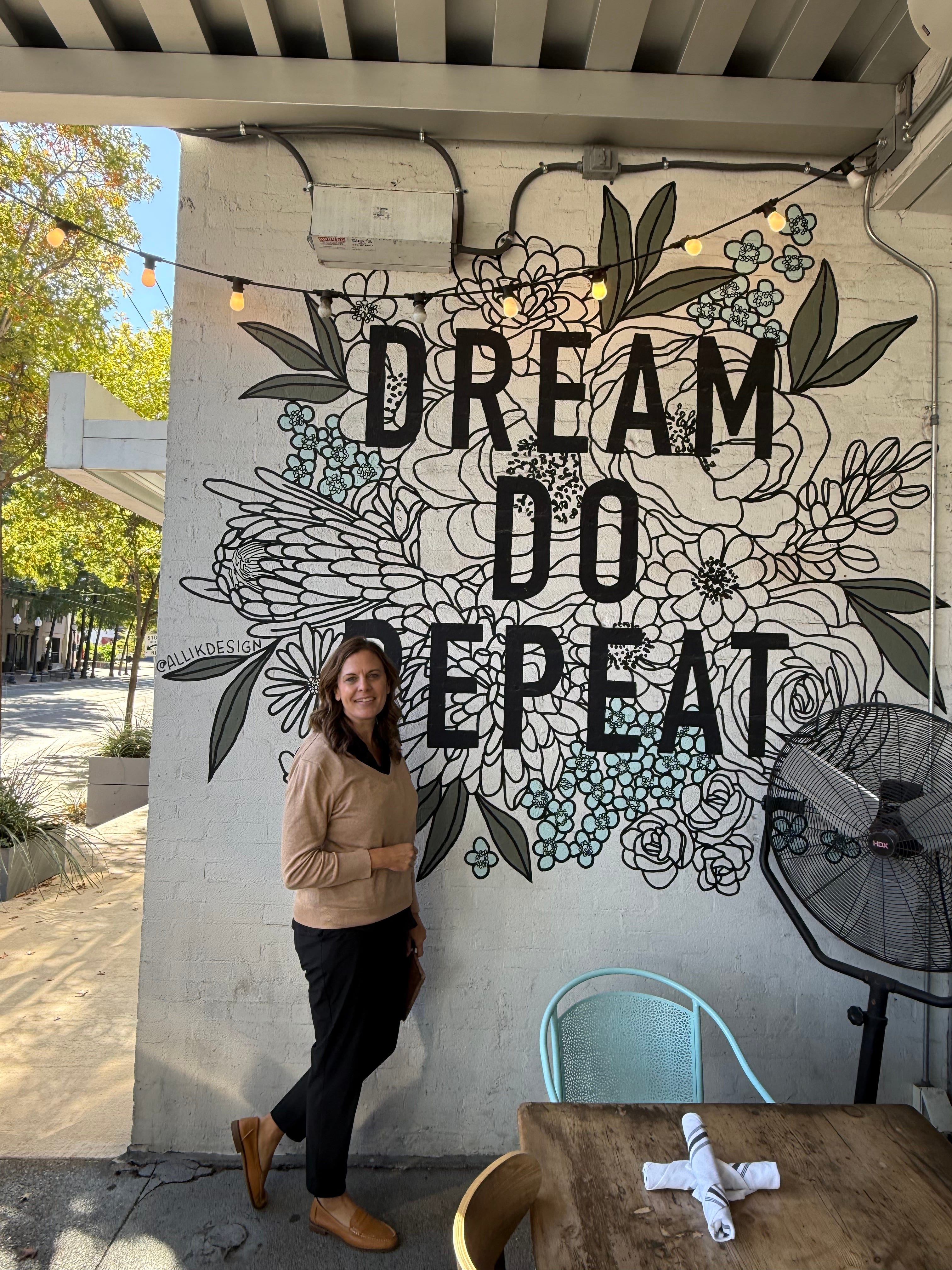
Here’s a pic of me reminding myself to stop and capture the moments around us. Don’t forget to DREAM - DO - REPEAT!
Tools That Make This Easier
• Notebook LM for organizing materials, creating summaries and building study notes
• Digital calendar for scheduling and backward planning
• Phone Notes or OneNote for the Everything list and reflections
• Focus Modes for automatically silencing nonessential notifications
The Takeaway
Clients who feel overwhelmed are not lacking ambition or motivation. They are lacking structure and clarity.
Modern research gives us a simple blueprint.
Get everything out of your head and into a plan.
Prioritize what matters.
Protect your attention with intention.
Celebrate steady and consistent progress.
Discipline is not about doing more. Discipline is about doing what matters most with clarity and purpose.
When clients learn to manage their attention as carefully as they manage their time, overwhelm becomes rhythm.
And rhythm becomes measurable progress.